
There’s something quietly satisfying about roasting almonds. It’s not just about turning them golden; it’s about unlocking a deeper, richer flavor that’s often overlooked. The simple act of paying attention to timing and temperature transforms these humble nuts into something more memorable, almost like a small ritual in the kitchen.
I’ve fiddled with different types of almonds—blanched, skin-on, raw—and each brings its own character when roasted. It’s a balancing act that requires a bit of patience, but once you get it right, the aroma alone makes your kitchen feel warmer, cozier. It’s a step I keep coming back to when I want a snack that’s both straightforward and a little special.
Focusing on the overlooked art of balancing the perfect roast—how timing, temperature, and even the type of almond influence flavor and texture, turning simple nuts into a centerpiece of snack or dish.
The story behind this recipe
- One rainy afternoon, I rummaged through my pantry and found a bag of almonds I’d meant to roast for ages. The smell when they hit the hot pan was instant nostalgia—reminded me of my grandmother’s kitchen, where she’d always have a jar of homemade roasted almonds. That moment made me realize how simple, yet transformative, the process can be, turning everyday nuts into a small, fragrant celebration.
- I started experimenting with different roasting times and temperatures, trying to coax out just the right crunch and flavor. Over time, I learned that each batch has its own personality—sometimes smoky, sometimes sweet, always better than store-bought. It’s become my go-to snack when I need a quick comfort, or a little something to share that feels homemade and honest.
- heading
- story_type
Key ingredients and tips
- Raw almonds: I prefer raw for their natural, slightly earthy flavor that deepens when roasted; you can swap in blanched almonds for a milder taste, but keep in mind they’ll be less crunchy.
- Oil (optional): A light drizzle of neutral oil helps with even browning and adds a subtle sheen, but you can skip it for a purer nut flavor—just watch for uneven toasting.
- Salt: A pinch of flaky sea salt heightens the nuttiness and adds a satisfying crunch; for a sweet twist, sprinkle with cinnamon or sugar after roasting.
- Additional flavorings: I love tossing in smoked paprika or cayenne for a spicy kick; these add complexity, but keep the quantities modest so they don’t overpower the almonds’ natural aroma.
- Cooling rack: Essential for crisping up the nuts evenly; avoid stacking them directly on the pan to prevent sogginess, and let them cool at room temp until fragrant and crunchy.
- Optional sweetener: A drizzle of honey or maple syrup before roasting creates a caramelized glaze, but be mindful of the roasting time to prevent burning—reduce heat if it starts to smoke.
- Pan choice: Use a sturdy, oven-safe skillet or baking sheet with sides for even heat distribution; avoid thin pans that might scorch the nuts or cause uneven color.
Spotlight on key ingredients
Raw almonds:
- I prefer raw for their natural, slightly earthy flavor that deepens when roasted; you can swap in blanched almonds for a milder taste, but keep in mind they’ll be less crunchy.
- Oil (optional): A light drizzle of neutral oil helps with even browning and adds a subtle sheen, but you can skip it for a purer nut flavor—just watch for uneven toasting.
- Salt: A pinch of flaky sea salt heightens the nuttiness and adds a satisfying crunch; for a sweet twist, sprinkle with cinnamon or sugar after roasting.
Cooling rack and pan:
- Cooling rack: Essential for crisping up the nuts evenly; avoid stacking them directly on the pan to prevent sogginess, and let them cool at room temp until fragrant and crunchy.
- Pan choice: Use a sturdy, oven-safe skillet or baking sheet with sides for even heat distribution; avoid thin pans that might scorch the nuts or cause uneven color.
Notes for ingredient swaps
- Raw almonds: I prefer raw for their natural, slightly earthy flavor that deepens when roasted; you can swap in blanched almonds for a milder taste, but keep in mind they’ll be less crunchy.
- Oil (optional): A light drizzle of neutral oil helps with even browning and adds a subtle sheen, but you can skip it for a purer nut flavor—just watch for uneven toasting.
- Salt: A pinch of flaky sea salt heightens the nuttiness and adds a satisfying crunch; for a sweet twist, sprinkle with cinnamon or sugar after roasting.
- Additional flavorings: I love tossing in smoked paprika or cayenne for a spicy kick; these add complexity, but keep the quantities modest so they don’t overpower the almonds’ natural aroma.
- Cooling rack: Essential for crisping up the nuts evenly; avoid stacking them directly on the pan to prevent sogginess, and let them cool at room temp until fragrant and crunchy.
- Optional sweetener: A drizzle of honey or maple syrup before roasting creates a caramelized glaze, but be mindful of the roasting time to prevent burning—reduce heat if it starts to smoke.
- Pan choice: Use a sturdy, oven-safe skillet or baking sheet with sides for even heat distribution; avoid thin pans that might scorch the nuts or cause uneven color.
Equipment & Tools
- Baking sheet: To hold the almonds evenly during roasting.
- Parchment paper or silicone baking mat: Prevent sticking and make cleanup easier.
- Cooling rack: Allow air circulation so almonds cool evenly and stay crisp.
- Measuring spoons: Accurately measure oil and salt for consistent results.
- Oven: Provide even heat for roasting.
Step-by-step guide to roasting almonds
- Preheat your oven to 180°C (350°F). Line a baking sheet with parchment paper or a silicone baking mat to prevent sticking.
- Measure out 2 cups of raw almonds. Look for almonds that are uniform in size for even roasting. Spread them in a single layer on the prepared baking sheet.
- If using oil, lightly toss the almonds with 1 teaspoon of neutral oil (like canola or grapeseed). This helps with even browning and adds a subtle sheen.
- Sprinkle a pinch of flaky sea salt over the almonds. For added flavor, consider a light dusting of smoked paprika or a sprinkle of cinnamon.
- Place the baking sheet in the oven and roast for 10-15 minutes. Shake the pan every 5 minutes to ensure even roasting. Keep an eye on them after 10 minutes to prevent burning.
- Check the almonds: they should be golden-brown and fragrant. The edges may look slightly darker but avoid over-darkening, which indicates burning.
- Once roasted, remove from oven and transfer almonds to a cooling rack. Spread them out so they cool evenly and crisp up.
- Allow the almonds to cool completely at room temperature. They will become crunchier as they cool. Taste and adjust salt if needed.
- Once cooled, store in an airtight container for up to a week. For extra crunch, re-toast briefly before serving if needed.
Let the almonds cool completely on a rack. Once cooled, transfer to an airtight jar or container. Store at room temperature to maintain crispness. For best flavor, let them rest a few hours before snacking or using in recipes.
How to Know It’s Done
- Color: Almonds should be golden and fragrant.
- Texture: Nuts feel firm and crunchy when cooled.
- Aroma: Smell a rich, nutty aroma as they roast, indicating proper doneness.
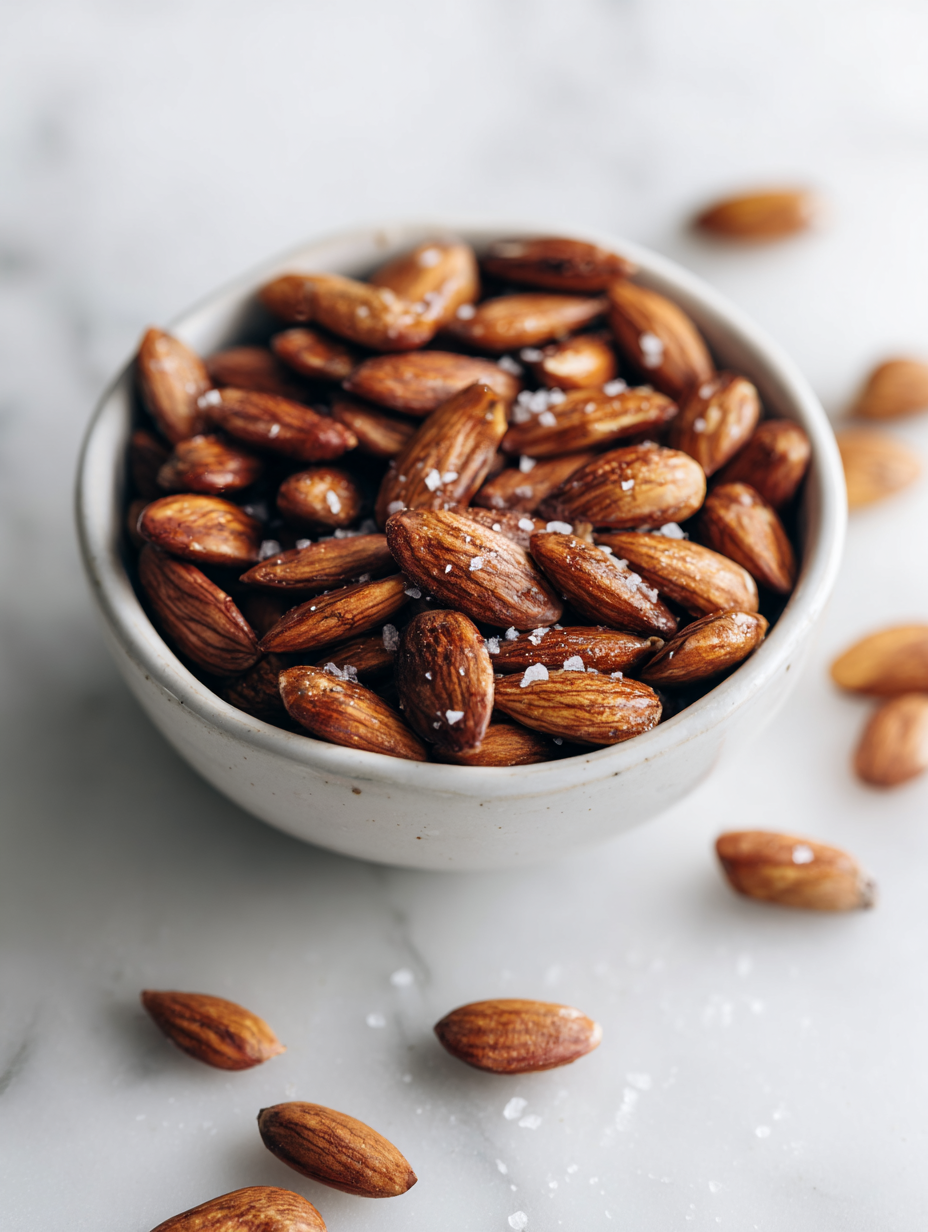
Roasted Almonds
Ingredients
Equipment
Method
- Preheat your oven to 180°C (350°F). Line a baking sheet with parchment paper or a silicone baking mat for easy cleanup.
- Measure out 2 cups of raw almonds and spread them out in a single, even layer on the prepared baking sheet.
- If desired, lightly toss the almonds with a teaspoon of neutral oil to promote even browning and a subtle sheen.
- Sprinkle a pinch of flaky sea salt over the almonds to bring out their natural flavor.
- Place the baking sheet in the oven and roast for 10 to 15 minutes. Shake the pan gently every 5 minutes to ensure even browning and prevent hotspots.
- Watch for a rich golden color and an inviting toasted aroma; the almonds should look slightly darker at the edges but not burnt.
- Once done, remove the almonds from the oven and immediately transfer them to a cooling rack to cool completely, allowing them to crisp up and develop full flavor.
- Let the almonds cool completely before transferring to an airtight container. They will become crunchier as they sit and are perfect for snacking or adding to dishes.
Notes
Pro tips for perfect roasted almonds
- Bolded mini-head: Use a hot pan → Ensure the almonds hit a sizzling surface for quick, even browning.
- Bolded mini-head: Shake frequently → Agitate the pan every 5 minutes to prevent hotspots and uneven roast.
- Bolded mini-head: Watch the color → Remove nuts when they turn golden and emit a toasted aroma, not before or after.
- Bolded mini-head: Cool thoroughly → Spread on a rack until completely cool for maximum crunch and flavor development.
- Bolded mini-head: Adjust for sweetness → Toss with honey or sugar right after roasting for a sticky, glazed surface.
- Bolded mini-head: Use parchment → Prevent sticking and make cleanup easy by lining your baking sheet.
- Bolded mini-head: Keep an eye on time → Over-roasting can cause bitterness; set a timer and check often after 10 minutes.
Common roasting mistakes and solutions
- FORGOT to preheat the oven → Preheat to 180°C (350°F) before roasting.
- DUMPED too many almonds at once → Roast in a single layer for even browning.
- OVER-TORCHED the nuts → Keep a close eye after 10 minutes, reduce heat if needed.
- FAILED to cool completely → Let almonds cool on a rack until fully crisp for perfect texture.
Fast fixes for roasted almonds
- When almonds burn quickly → Splash with a teaspoon of water and resume roasting.
- If almonds stick to pan → Patch with a little oil and stir gently.
- When nuts are underdone → Shield with foil and extend roasting by 2-3 minutes.
- If almonds taste bland → Toss with more salt or spices post-roast for enhanced flavor.
- When in doubt about doneness → Do a quick taste test; they should be crunchy and fragrant.
Prep, store, and reheat tips
- Prep the almonds: You can toast and cool the almonds a day ahead, which allows flavors to deepen overnight.
- Store in an airtight container: Keep roasted almonds at room temperature for up to a week; they stay crunchy and fragrant.
- Shelf life: For maximum freshness, consume within 5 days, as almonds may start to lose crunch afterward.
- Reheating: If they lose crispness, briefly warm in a 150°C (300°F) oven for 3-5 minutes, until fragrant and crunchy again.
- Sensory note: The aroma should be rich and nutty, with a slight caramelized scent after reheating, signaling they’re ready to snack or serve.
Top questions about roasted almonds
1. Why do roasted almonds taste better?
Roasted almonds develop a richer, deeper flavor and crunch that raw almonds lack, thanks to caramelization during roasting.
2. Can I use flavored or salted almonds?
Use raw, unsalted almonds for the best flavor; you can add salt after roasting if desired.
3. How do I roast almonds evenly?
Preheat your oven to 180°C (350°F). Spread almonds in a single layer, then roast for 10-15 minutes, shaking occasionally.
4. How do I know when almonds are done?
Remove almonds once they’re golden and fragrant, then cool on a rack to crisp up fully.
5. How long do roasted almonds stay fresh?
Store roasted almonds in an airtight container at room temperature for up to a week; reheat briefly if needed.
6. Should I use oil when roasting almonds?
Adding a small amount of oil helps with browning and sheen, but you can skip it for a purer nut flavor.
7. What if my almonds burn?
Avoid over-roasting, which can make almonds bitter. Keep an eye after 10 minutes and shake the pan often.
8. How can I flavor my roasted almonds?
You can customize flavors by tossing almonds with spices like paprika or cinnamon before roasting, for extra depth.
9. Why is cooling important after roasting?
Allow the almonds to cool completely before storing; warm nuts may become soggy or lose crunch.
10. Can I reheat roasted almonds?
Reheat roasted almonds in a 150°C (300°F) oven for 3-5 minutes to regain crunch and aroma.
There’s something about the smell of toasted almonds that instantly makes a space feel warmer, more inviting. Once you master the timing, it becomes a simple act of turning raw nuts into a snack or ingredient that carries a whisper of caramel and depth.
These roasted almonds aren’t just a treat—they’re a small reminder that simple, honest techniques can elevate everyday ingredients into something memorable. Whether tossed into salads, sprinkled over yogurt, or enjoyed straight from the jar, they’re a quiet staple that’s worth the effort.

Welcome to Exploreing New Tastes. I’m really glad you found your way here. I’m a food blogger driven by curiosity more than perfection. I think about flavors constantly, how they change across cultures, how a small tweak can completely shift a dish, and how food tells stories long before anyone sits down to eat. This blog is where I document that curiosity, one recipe and one experience at a time.