
Baked beet chips might sound simple, but they’re a reminder of how humble ingredients can surprise us. There’s something about the earthy sweetness of beets, crisped up in the oven, that feels both nostalgic and oddly sophisticated. It’s a snack that’s easy to make, yet feels like a little treat you’ve earned.
I’ve always loved the idea of turning vegetables into snackable bites, especially when they’re as colorful and radiant as these beets. It’s a process that demands patience—getting that perfect crunch takes a bit of watching and tweaking—but the result offers a satisfying balance of natural sweetness and crispy texture. It’s my go-to for a mindful snack that keeps things simple but special.
Focusing on the unexpected sweetness and earthiness of beets, this recipe transforms humble root vegetables into crispy, snackable chips that balance savoriness with a hint of natural sugar, offering a mindful snack that encourages appreciation of root-to-table simplicity.
The story behind this recipe
- One day, I was craving something earthy and unexpectedly sweet—beets seemed perfect. I wanted a snack that felt satisfying but didn’t require much fuss, just time in the oven. That’s when the idea of crispy beet chips hit me, inspired by childhood chip cravings but with a veggie twist.
- Turning humble beets into crunchy chips felt like capturing a little magic. It’s funny how a simple vegetable can become a snack that makes you pause and appreciate its natural beauty. Every batch reminds me to keep things simple, letting the ingredients shine in their own quiet way.
- heading
- story_type
Key ingredients and tips
- Beets: Their earthy sweetness makes these chips stand out. Use fresh, firm beets for the best color and flavor. If yours are limp or dull, pick others—they won’t crisp up nicely.
- Olive oil: A light coating is key. It helps the slices crisp evenly and adds a subtle fruity aroma. Too much, and they get greasy—too little, and they stick or dry out.
- Salt: I like flaky sea salt for that satisfying crunch and burst of saltiness. Adjust to taste, but don’t skip it—beets can be surprisingly dull without it.
- Pepper or spice: A pinch of black pepper or chili flakes adds a smoky kick. Use sparingly if you want a milder snack, or go bold—your call.
- Optional herbs: A sprinkle of thyme or rosemary before baking can add earthy aroma. Just a light touch, so it doesn’t overpower the beet’s natural flavor.
- Optional sweetener: A tiny drizzle of honey or maple before baking can enhance the earthy sweetness. Use sparingly—sometimes less is more.
- Vinegar or lemon juice: A splash after baking brightens the flavor and cuts through the earthiness. It’s a small step that makes a big difference.
Spotlight on key ingredients
Beets:
- Their earthy sweetness is what makes these chips special. The vibrant color and firm texture ensure they crisp up perfectly. Use fresh, unblemished beets for the best results.
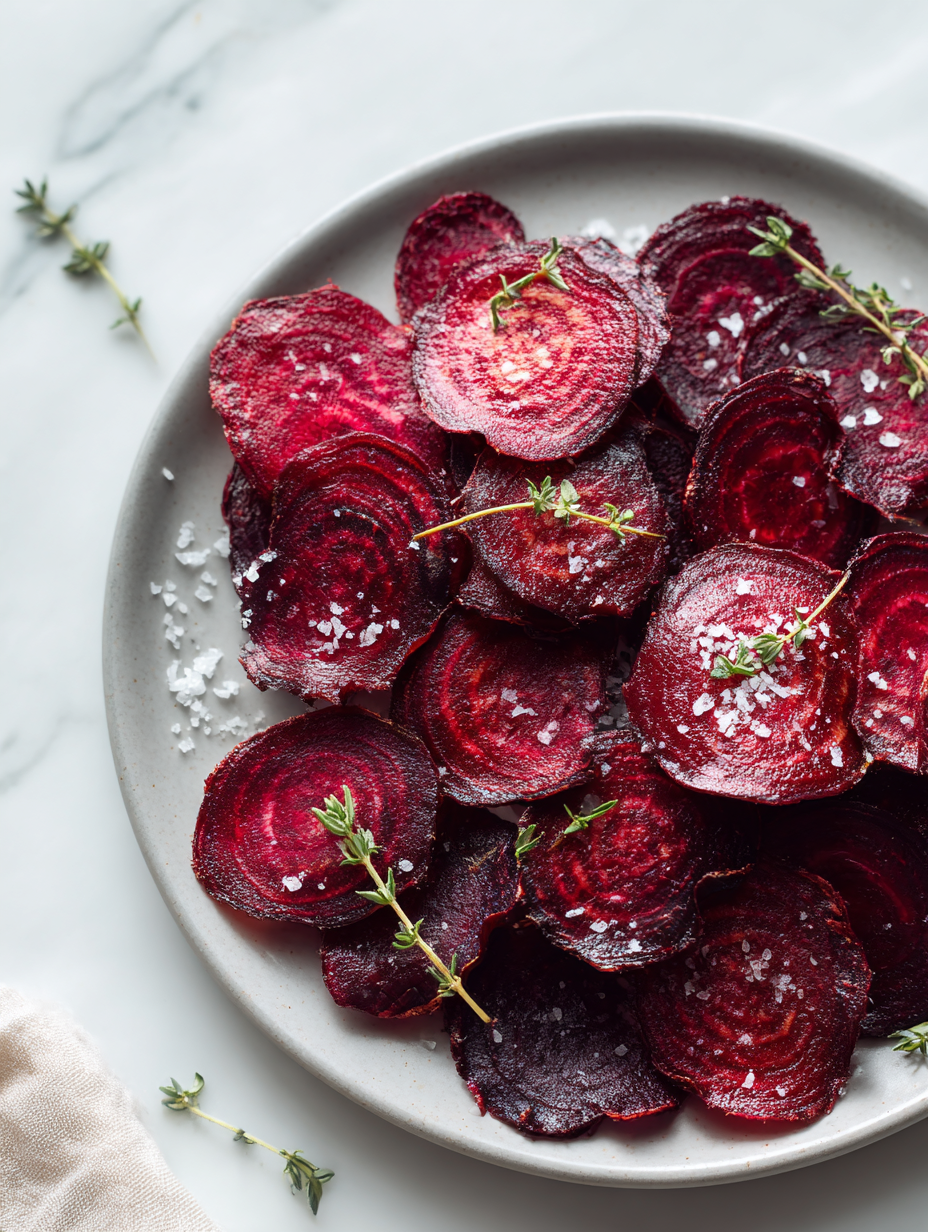
- During baking, they become intensely sweet and develop a slightly smoky aroma. Watch for color deepening and crisp edges to gauge doneness.
Olive oil:
- A light brush ensures even crisping and adds a subtle fruity aroma. Too much oil makes the chips greasy, so measure carefully.
- It melts into the slices, helping them crisp and brown evenly. During baking, it releases a fragrant, slightly grassy scent that signals readiness.
Notes for ingredient swaps
- Oil: Avocado oil works well, too, with a mild, buttery flavor that crisps nicely. Skip if you want a neutral taste; olive oil adds a fruity aroma.
- Salt: Sea salt flakes give a satisfying crunch and burst of saltiness. Use regular table salt if you prefer a finer texture, but reduce the quantity slightly.
- Spices: Chili flakes or smoked paprika can add a smoky or spicy kick. If you prefer milder, skip the spices or try herbs like thyme for earthiness.
- Sweetener: A drizzle of honey or maple enhances the natural sweetness. You can omit it for a more savory chip, or try a splash of balsamic vinegar for tang.
- Vinegar: Lemon juice brightens the flavor with a fresh zing. Apple cider vinegar adds depth, but skip if you want pure earthy beet flavor.
- Herbs: Fresh thyme or rosemary can be sprinkled before baking for aroma. Dry herbs work too, but use sparingly to avoid overpowering.
- Beets: Rainbow or golden beets add visual interest and slightly different earthiness. Use any beet you have, but note color and flavor differences.
Equipment & Tools
- Mandoline or sharp knife: To slice the beets uniformly thin for even baking.
- Baking sheet: To hold the slices during baking.
- Parchment paper: To prevent sticking and make cleanup easier.
- Small bowl: To mix and toss the oil and spices.
- Tongs or spatula: To flip slices for even baking.
Step-by-step guide to baked beet chips
- Gather your equipment: a mandoline or sharp knife, baking sheet, parchment paper, and a small bowl for oil. Preheat the oven to 150°C (300°F).
- Wash and peel the beets carefully. Use a mandoline to slice them very thin, about 1/16 inch, ensuring uniform thickness for even crisping.
- In a small bowl, mix a tablespoon of olive oil with a pinch of salt and optional spices. Toss the beet slices gently in the oil mixture, making sure each gets coated thinly.
- Line the baking sheet with parchment paper. Arrange the beet slices in a single layer, not overlapping, for maximum crispness.
- Place the sheet in the oven. Bake for 25-30 minutes. Keep an eye on them, especially around the 20-minute mark. They should turn crispy and slightly dark around the edges.
- Halfway through, flip the slices with tongs or a spatula to promote even baking. Be cautious—thinner edges can burn quickly.
- Once they’re crisp and matte, remove the tray. Let the chips rest on the baking sheet for 5 minutes. They will continue to crisp as they cool.
- Transfer to a wire rack if you want to avoid sogginess. Serve once cooled, or store in an airtight container for later snacking.
Let the chips rest for 5 minutes on the tray to firm up. Serve immediately or store in an airtight container once cooled completely. They are best enjoyed fresh but keep well for a few days stored properly.
How to Know It’s Done
- Color: edges are dark golden, not burnt.
- Texture: chips are firm and brittle, with a satisfying snap.
- Appearance: even, thin slices with no soggy spots.
Baked Beet Chips
Ingredients
Equipment
Method
- Start by washing and peeling the beets carefully to remove any dirt or blemishes. Use a mandoline or a sharp knife to slice the beets very thin, about 1/16 inch, ensuring each slice is uniform for even baking. You should have a good handful of thin, vibrant slices ready to go.
- In a small bowl, whisk together the olive oil with a pinch of sea salt and any optional spices or herbs you like—such as black pepper, chili flakes, or thyme. This mixture will help the slices crisp up and add flavor.
- Gently toss the beet slices in the oil mixture, making sure each slice gets a light, even coating. Use your hands or tongs to handle the slices carefully so they don’t break apart.
- Line a baking sheet with parchment paper to prevent sticking. Arrange the slices in a single layer on the sheet, making sure they do not overlap so they can crisp evenly during baking.
- Place the baking sheet in your preheated oven at 150°C (300°F). Bake for 25 to 30 minutes, checking around the 20-minute mark. The slices should turn crispy and slightly dark around the edges but not burnt.
- Halfway through baking, flip the slices using tongs or a spatula. This promotes even crisping and prevents burning on one side. Keep an eye on them as they bake, especially towards the end of the time.
- Once the chips are crisp and fragrant, remove the baking sheet from the oven. Let the chips cool on the sheet for about 5 minutes—they will continue to crisp as they cool down.
- If desired, sprinkle the chips with a little more sea salt or a splash of lemon juice or vinegar to enhance their flavor. Serve immediately for the best crunch, or store in an airtight container once fully cooled.
Pro tips for perfect baked beet chips
- Thin Slices: Use a mandoline for consistent thinness, ensuring even crisping and avoiding soggy edges.
- Low and Slow: Bake at 150°C (300°F) for gentle dehydration; go lower if your beets are very moist.
- Watch and Flip: Keep an eye around 20 minutes; flip slices halfway to promote uniform browning.
- Cool on Rack: Let chips cool on a wire rack to prevent sogginess and maintain crunch.
- Adjust Thickness: Slightly thicker slices yield more substantial chips, thinner slices become crispy quicker.
Common mistakes and how to fix them
- FORGOT to adjust oven temperature → set oven properly for even crisping.
- DUMPED the beets too thick → slice thinner for crispier chips.
- OVER-TORCHED the edges → remove chips as soon as edges darken slightly.
- MISSED flipping halfway → flip slices to ensure even baking and prevent burning.
Quick fixes and pantry swaps
- If slices stick, splash a little more oil before baking.
- When chips are burned, quickly patch with fresh slices and lower oven temp.
- Dumped too many slices on one tray? Swap to multiple baking sheets to prevent sogginess.
- Over-torched edges? Shield with foil and reduce heat for the next batch.
- When chips lack crunch, rescue by baking at a lower temp for 5 more minutes.
Prep, store, and reheat tips
- Pre-slice beets and store in an airtight container in the fridge for up to 24 hours to maintain freshness and color.
- Bake chips a day ahead; once cooled, keep them in a sealed container at room temperature for 2-3 days, preserving crunch and flavor.
- Reheat chips briefly in a 150°C (300°F) oven for 3-5 minutes to restore crispness, watching for slight crackle and golden edges.
- For longer storage, freeze baked chips in an airtight bag for up to a month; reheat directly from frozen for best texture.
- Avoid refrigerating for too long, as moisture can make chips soggy; best enjoyed within the first few days for optimal crunch and flavor.
Top questions about baked beet chips
1. How thin should I slice the beets?
Slice the beets as thin as possible, about 1/16 inch, for maximum crispness. Thicker slices tend to be chewy.
2. What oven temperature and time work best?
Bake at 150°C (300°F) for 25-30 minutes. Keep an eye on them around 20 minutes to prevent burning.
3. Do I need special equipment or tricks?
Use parchment paper to prevent sticking. Flip slices halfway through baking for even crispness.
4. How should I finish or store the chips?
Let the chips cool on a wire rack for 5 minutes. They will crisp up more as they cool.
5. Can I use a different oil?
Yes, you can substitute olive oil with avocado oil or coconut oil. The flavor will vary slightly but still crisp well.
6. Should I add any seasoning after baking?
Adding a splash of lemon juice after baking brightens the flavor and cuts earthy tones. Vinegar works too.
7. What kind of beets should I choose?
Beets with fresh, firm skin and vibrant color will crisp best. Avoid dull or limp beets for crispier chips.
8. What if my chips are soggy or burnt?
If slices are soggy, increase oven temperature slightly or extend baking time. For burnt edges, lower heat and check early.
9. How long do baked beet chips last and how to reheat?
Store in an airtight container at room temp for 2-3 days. Reheat at 150°C (300°F) for 3 minutes to restore crunch.
10. What quick fixes are available for common issues?
When slices stick, lightly spray with oil and space them out more. When edges darken too quickly, lower oven temp.
Making these baked beet chips is a small act of patience that pays off with every crispy bite. The earthy sweetness and vibrant color make them a standout snack that’s both satisfying and oddly elegant. It’s a reminder that simple ingredients, handled with care, can surprise us in the best ways.
Once cooled, they store easily and still pack that crunch, making them perfect for snacking anytime. These chips aren’t just a treat—they’re a little celebration of how humble roots can turn into something special when you give them a moment in the oven.

Welcome to Exploreing New Tastes. I’m really glad you found your way here. I’m a food blogger driven by curiosity more than perfection. I think about flavors constantly, how they change across cultures, how a small tweak can completely shift a dish, and how food tells stories long before anyone sits down to eat. This blog is where I document that curiosity, one recipe and one experience at a time.